
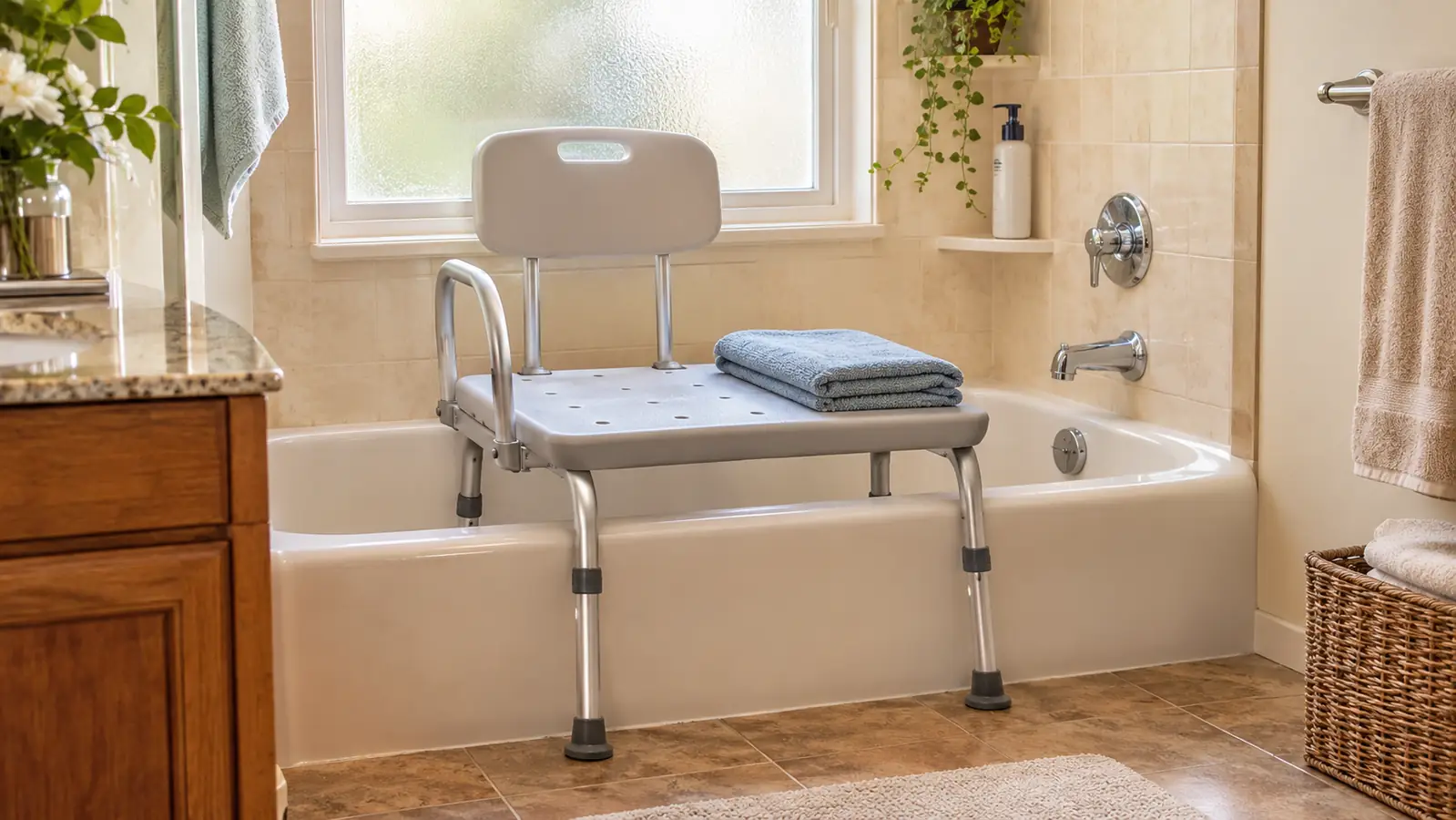
The tub wall in our upstairs bathroom is fourteen inches high. I measured it with a tape measure the week my mother moved in with us, because she was eighty-five then and six weeks out from a hip replacement, and she stood in the doorway looking at that wall like it was a fence somebody had told her to climb. She could not lift her leg over it. She also was not going to spend the rest of her life taking sponge baths in a house with a perfectly good shower. We bought a Drive Medical tub transfer bench that same week. Two years later it is still sitting in that tub, and I have watched someone use it on more mornings than I can count without once worrying that she would fall getting in.
I am not a product tester. I spent thirty-one years as a nurse in an outpatient clinic in Worcester, Massachusetts, mostly beside physical therapists, mostly watching people get told what to do and then watching them go home and do something else. So I know what a bath bench is supposed to do and I know how often the thing in the bathroom and the thing in the catalog turn out not to be the same object. What follows is two years of daily use, one hip replacement, one eighty-seven-year-old woman who is stubborn about her independence, and a bathroom that has not been renovated since the 1980s.
The Quick Verdict
It does the one job that matters, which is getting a person over the tub wall without their feet ever carrying their full weight. It is not graceful and it turns your tub into a shower, but it has not loosened, cracked or slipped in two years.
Amazon Check Today's Price →If someone in your house is standing in the doorway doing the math on that tub wall, start here
This is the bench that has lived in our only full bathroom for two years. Rated to 350 pounds, legs that adjust from 17.5 to 22.5 inches, ten pounds total. Measure your tub and the person's lower leg first, then set the height before anyone sits down.
Amazon Check Today's Price on Amazon →How I've Used It
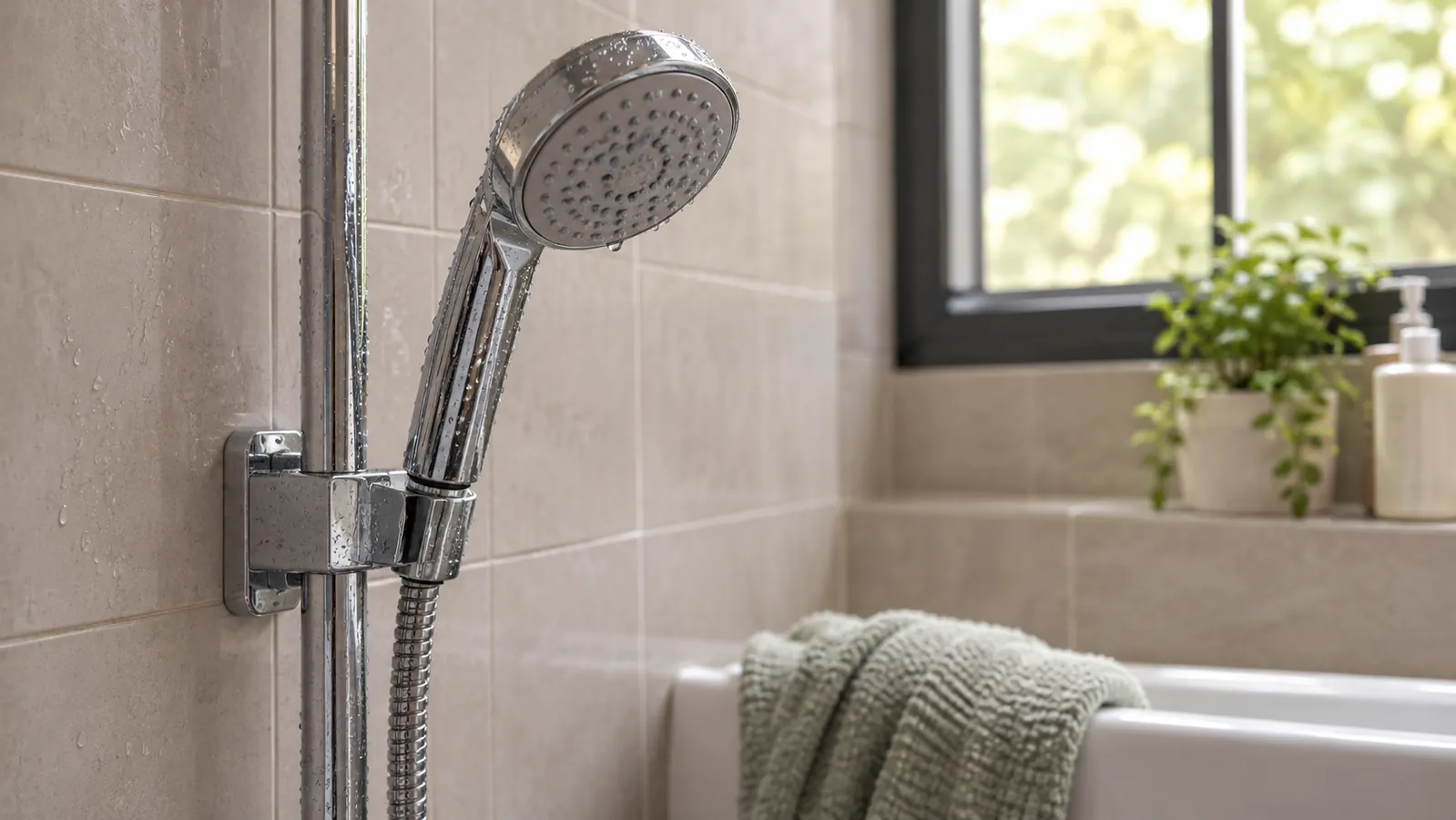
My mother, Samira, bathes every other day. That is the schedule we settled into and it has not changed in two years. On shower days she sits down on the half of the bench that stays outside the tub, swings one leg over the wall, then the other, then slides across to the half that sits inside. She showers seated, using a handheld shower head we had put on a slide bar six months before her surgery, because we saw the surgery coming and I am a planner. I sit on the closed toilet lid, hand her the soap, and take the shower head back when she wants her back rinsed. The whole thing takes about fifteen minutes now. It took about forty at the start, and most of that forty was her arguing with me about whether she needed help at all.
The bench has not moved. It lives in that tub permanently and the shower curtain hangs outside it. The only maintenance is a wipe down with a cloth and a spray bottle of bathroom cleaner, plus a monthly check where I put a hand on each corner and push. Nothing has loosened. The legs still hold their setting. The seat still looks like the seat looked in the first month, which is more than I can say for the bath mat.
One thing I did not expect: I use it too. I am sixty-three and I have mild arthritis in my right knee, and on a bad morning the idea of standing on one leg over a tub wall does not appeal to me either. I have sat on that bench, showered, and gotten out without incident. It is rated for three hundred and fifty pounds and I am nowhere near that, so it does not so much as creak under me.

The Legs Are the Part That Actually Matters
People look at the seat. The seat is the least interesting part of the thing. What decides whether a transfer bench works in your house is the legs, because the legs determine whether the bench fits your tub and whether your mother's feet reach the floor when she sits down. This bench adjusts at the legs, and the seat height runs from seventeen and a half inches at the lowest to twenty-two and a half at the highest. That is a five-inch range, and five inches is the difference between a woman who can push herself up and a woman who is stuck sitting there waiting for somebody to lift her.
We set ours near the bottom, at about seventeen and a half inches, because Samira is five foot three and her feet had to be flat on the tile before she would trust standing up again. My brother Karim, who visits on Sundays and is six feet tall, sat on it once at that setting and looked like a man in a child's chair. That is not a flaw in the bench. That is the adjustment doing exactly what it is for. If you take one thing from this review, take this: set the height before anyone sits down on it wet, have them sit with their feet flat, and if you are unsure what height is right for the person, ask their physical therapist rather than guessing.
The frame is aluminum and the seat is plastic, and the whole unit weighs ten pounds. Ten pounds is light enough that I can lift it out of the tub by myself when I want to scrub the tub floor, and heavy enough that it does not skate around when somebody sits down hard. I would not call it furniture. I would call it a piece of equipment that is trying to stay in one place while a person uses it, and it does that.
The Slide Across the Tub Wall
Here is the part nobody explains well enough. A transfer bench is not a shower chair with longer legs. On a shower chair, you sit down inside the tub. On a transfer bench, two legs stand inside the tub and two stand on the bathroom floor, and the seat spans the wall between them. You sit on the outside half with your feet on the tile, lift one leg over the wall, then the other, then slide your backside across until you are centered over the tub. Your hands and your seat do the work. Your feet never take your full weight over that wall. That is the entire idea, and it is why this was the first thing we bought rather than the last.
It took Samira three tries to trust it. The first time she sat down and refused to move, and the two of us just sat in the bathroom for a while. The second time she slid about four inches and stopped. The third time she went all the way across and said, and I am quoting, that was nothing. I tell people that story because the fear is real and the fear does go away, and if your parent is refusing to try a bench like this, the refusal usually is not about the bench.
The seat is fifteen and a half inches deep, which is deep enough that a person can sit properly rather than perch on the front edge. That matters more than it sounds. A shallow seat pushes people forward, and sitting forward on a wet surface eight weeks after a hip replacement is how people end up back in the hospital. You want enough seat under you that your hips are behind your feet. Fifteen and a half inches gives her that.
Fit, Weight and a Small Bathroom
Our upstairs bathroom is not large. The door is twenty-eight inches, the tub is a standard alcove, and I genuinely worried that a Drive Medical bench twenty-three inches wide would make the room unusable. It does not. It sits in the tub, the floor in front of the tub is where it always was, and the shower curtain closes over it. If your bathroom is tight enough that you already turn sideways to reach the sink, measure before you buy anything. Measure the tub, measure the wall, and confirm there are a few inches of dry floor for the outside legs to stand on, because those outside legs carry the person's weight while they get on.
The three hundred and fifty pound weight limit is the number most shoppers look at, and it is a generous number. It means a husband and wife can share the same bench without either of them thinking about it. The number people overlook is the ten pound weight of the bench itself, which is the number that matters when you are the one lifting it out of the tub to clean, or loading it into a car to take to a hotel or to a relative's house for a weekend. It goes into the back of my Subaru Forester with room left over. That was a factor for us and I suspect it is a factor for a lot of families.
Two Years In, Honestly
A review that says nothing broke in two years is not a useful review, so here is what the wear actually looks like. The bench looks used. The plastic seat has dulled where she sits, which is where a plastic seat dulls. Nothing has cracked. No leg has slipped a notch while somebody was on it, and I have not found a joint that has worked loose. The aluminum frame shows no rust, which is more than I can say for the metal shower caddy that lived in that tub before the bench did.
The warranty is a limited lifetime warranty. I have never had to use it, so I cannot tell you what the claim process feels like from the inside. I can tell you that the paperwork is in the folder where we keep the appliance manuals, and that after two years the Drive Medical bench is the only mobility item in the house I have never once thought about replacing.
Where It Falls Short
There are real tradeoffs and I will not pretend otherwise. The bench is bulky in the tub, and because it lives there, that tub is no longer a tub. If somebody in your house still takes baths, this converts their bathtub into a shower and you will be lifting the bench in and out, and at ten pounds and an awkward shape that gets old inside of a week. This is the main reason a two bathroom household sometimes puts a bench in one bathroom and leaves the other one alone.
It also does not solve the whole bathroom. It gets a person into the tub. It does not help them get up off the toilet afterward, and it does nothing about a slippery floor. We bought a Medline toilet safety rail the same week, and it was every bit as necessary. The bench is one working piece of a bathroom that works, not the entire answer.
Last, it is not a dignified looking object. My mother spent the first month calling it the thing, as in, did you wipe down the thing. She has friends who will not have one in the house because of how it looks, and I understand the feeling. I also watched her come out of that bathroom dry and steady a few hundred times, and I know which of those two things I would choose if I had to choose.
What I Liked
- The person's feet never carry their full weight over the tub wall, which is the whole point
- Seat height adjusts from 17.5 to 22.5 inches, so it can be matched to a short person or a tall one
- Rated to 350 pounds, which covers most couples sharing one bathroom
- Ten pounds total, so one adult can lift it out of the tub or into a car alone
- Fifteen and a half inch seat depth lets a person sit back rather than perch forward
- Aluminum frame and plastic seat have shown no rust, cracking or loosening in two years
- Limited lifetime warranty, though we have never needed to use it
Where It Falls Short
- It lives in the tub, so that bathtub is no longer usable as a bathtub
- Twenty-three inches wide is a lot of bench for a very small bathroom
- It does nothing for the toilet, the floor or the sink, so it is one purchase among several
- It looks like medical equipment and some people refuse it on those grounds alone
- Lifting it in and out for a household that still takes baths gets tedious fast
Five inches of adjustment is the difference between a woman who can push herself up and a woman who is stuck sitting there waiting for somebody to lift her.
Who This Is For
This is for a household with one full bathroom, a tub and shower combination, and somebody who cannot step over the tub wall anymore. That is the exact situation we were in. It is also for the person who can still stand and walk but does not trust one leg on a wet surface, which describes a great many people in their seventies and eighties who would never describe themselves as needing help. The Drive Medical bench asks nothing of them but that they sit down and slide.
It is also, frankly, for the adult child doing the shopping. If you are the one measuring the tub at eleven at night and reading reviews on your phone, the thing you need to know is that this bench has held up under daily use by an eighty-seven-year-old woman for two years with nothing more than a wipe down. Set the legs to the right height, put a handheld shower head on the wall, and be in the room for the first several showers. That is the whole setup.
Who Should Skip It
Skip it if your bathroom already has a walk-in shower with a low or zero threshold. There is no tub wall to cross, and a simple shower chair does the job with far less bench in the room. Skip it if somebody in the house still takes baths regularly and there is no second bathroom, because you will be moving this thing twice a day. Skip it if the person using it cannot sit upright without support and cannot follow a simple instruction like lift your left leg first, because that is a different piece of equipment and a conversation to have with an occupational therapist rather than a purchase to make on your own.
And skip it if nobody has measured anything. A bench that does not fit the tub, set at a height that leaves the person's feet dangling, is worse than no bench at all because it invites confidence it has not earned. Measure the tub wall height and the person's lower leg. Ask their doctor or physical therapist about the height and about whether a transfer bench is the right aid for their situation, because I am a retired nurse writing about my own mother's bathroom and not about yours.
Two years in our only bathroom, and it is the one piece of equipment I have never thought about replacing
Adjustable legs from 17.5 to 22.5 inches, a 15.5 inch seat, 350 pound weight limit, ten pounds total, limited lifetime warranty. Measure first, set the height second, and stay in the room for the first week of showers.
Amazon Check Today's Price on Amazon →