

My mother stopped halfway down our three front steps, looked at the sidewalk, and said she would skip the walk today. That was the morning I stopped pretending the hospital walker was good enough.
Her name is Samira. She is 87, she moved in with me two years ago after a hip replacement, and she is the most stubborn person I have ever loved. The walk to the end of the street and back is hers. She has made it in drizzle and in cold. Skipping it was not a small thing.
What she had was the two-wheel walker the hospital sent home with us. It is decent equipment for a hallway. On a sidewalk it is slow work. You lift, you place, you lift, you place, and every crack in the pavement turns into a decision.
I spent 31 years as an outpatient clinic nurse in Worcester, most of it working beside physical therapists, so I know what a decent fit looks like. I measured her. Standing tall in her shoes, the handle should land near the crease of the wrist. About 20 months ago, a few months after the surgery, we got her a Drive Medical rollator walker with a seat. It is the reason she still makes that walk.
Twenty months, one walk a day, three front steps, no falls. What gave her the walk back was not her hip. It was the seat at the halfway point.
She Rests at the Mailbox Now, Not at the Front Door
The seat is the reason the walk happens at all. It gives her somewhere to sit at the halfway point instead of turning around. Check the current price and the handle height range before you order.
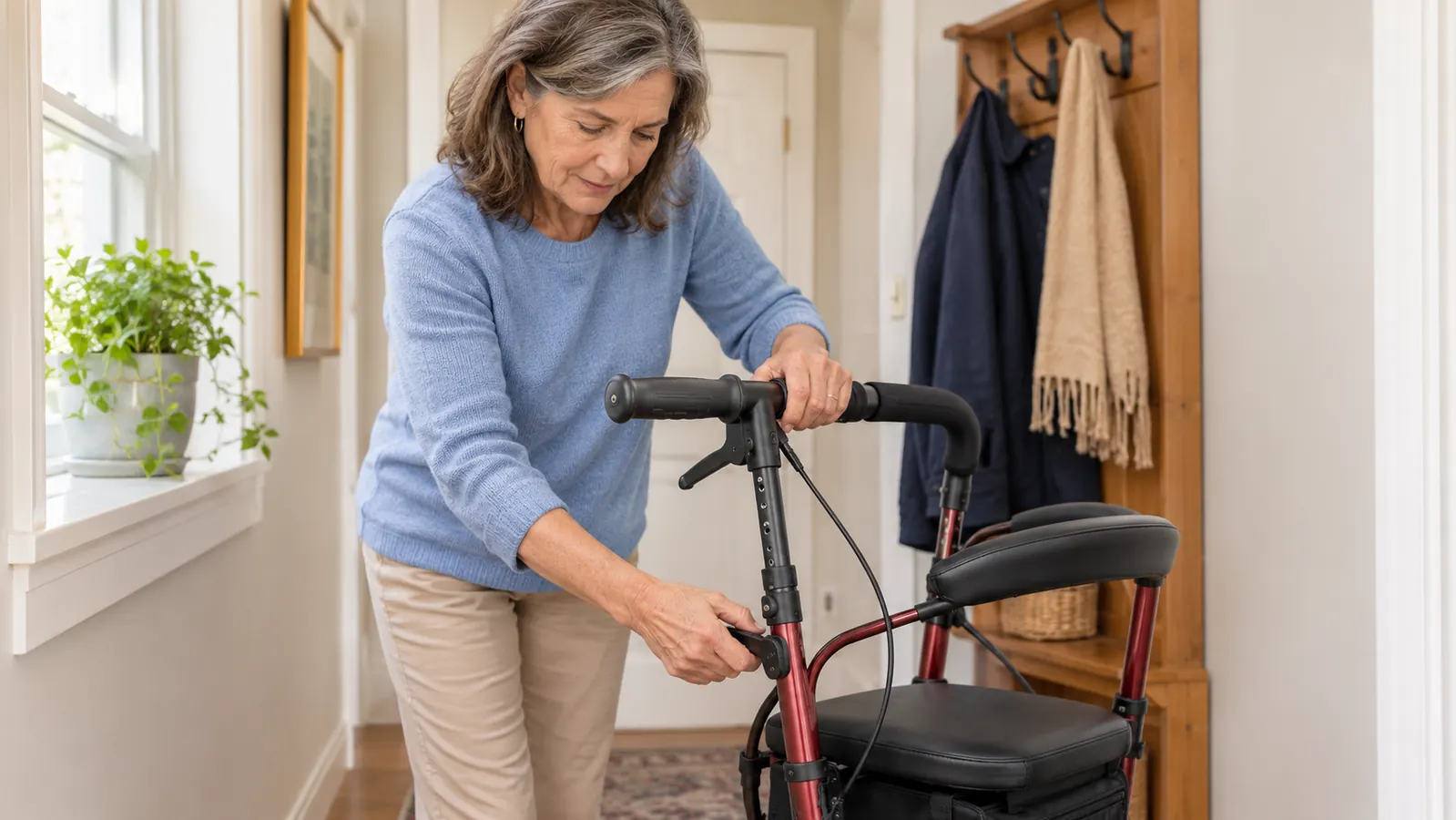
Amazon Check Today's Price on Amazon →The numbers matter less than what they mean on a Tuesday. The rollator weighs 20 pounds and holds up to 350 pounds. The Drive Medical frame is alloy steel, the wheels are 7.5 inches, and the handles adjust with a lever, so I can raise them an inch for her without hunting for a wrench. The back support folds up and lifts off, which sounds like a small thing until you are trying to load it into a car. The frame carries a limited lifetime warranty.
What the Seat Actually Changed
The first week was awkward. She thought it looked like a hospital, which is the one thing she has said about every aid that has come into this house. She got over it at the mailbox, sitting down, with the whole street walking past and not one person looking twice. By the second week she was telling me to hurry up.
Samira rests at the mailbox on the corner. That is the whole of it. She sits for two or three minutes, says something about the weather to whoever is out, and stands up. The walk home is then a separate walk, not the second half of a hard one. Before the seat, the halfway point was where she turned around. Now it is where she takes a breath.
Standing up from the seat took her a few tries at first. She has learned to lean forward before she rises, which is what the therapists taught her in the clinic long before any of this. She pushes on the handles, gets her feet under her, and then she is off again. I watch from the porch, and I have stopped holding my breath.
The rollator does not come inside. Our hallway is too narrow, and she does not need it in the house. Indoors she uses her quad cane, which stands on its own beside her chair. On the three front steps I carry the rollator down and set it at the bottom, and she comes down holding the banister with me one step behind her. Outdoor aid outdoors, indoor aid indoors. Mixing the two up is how people get hurt.
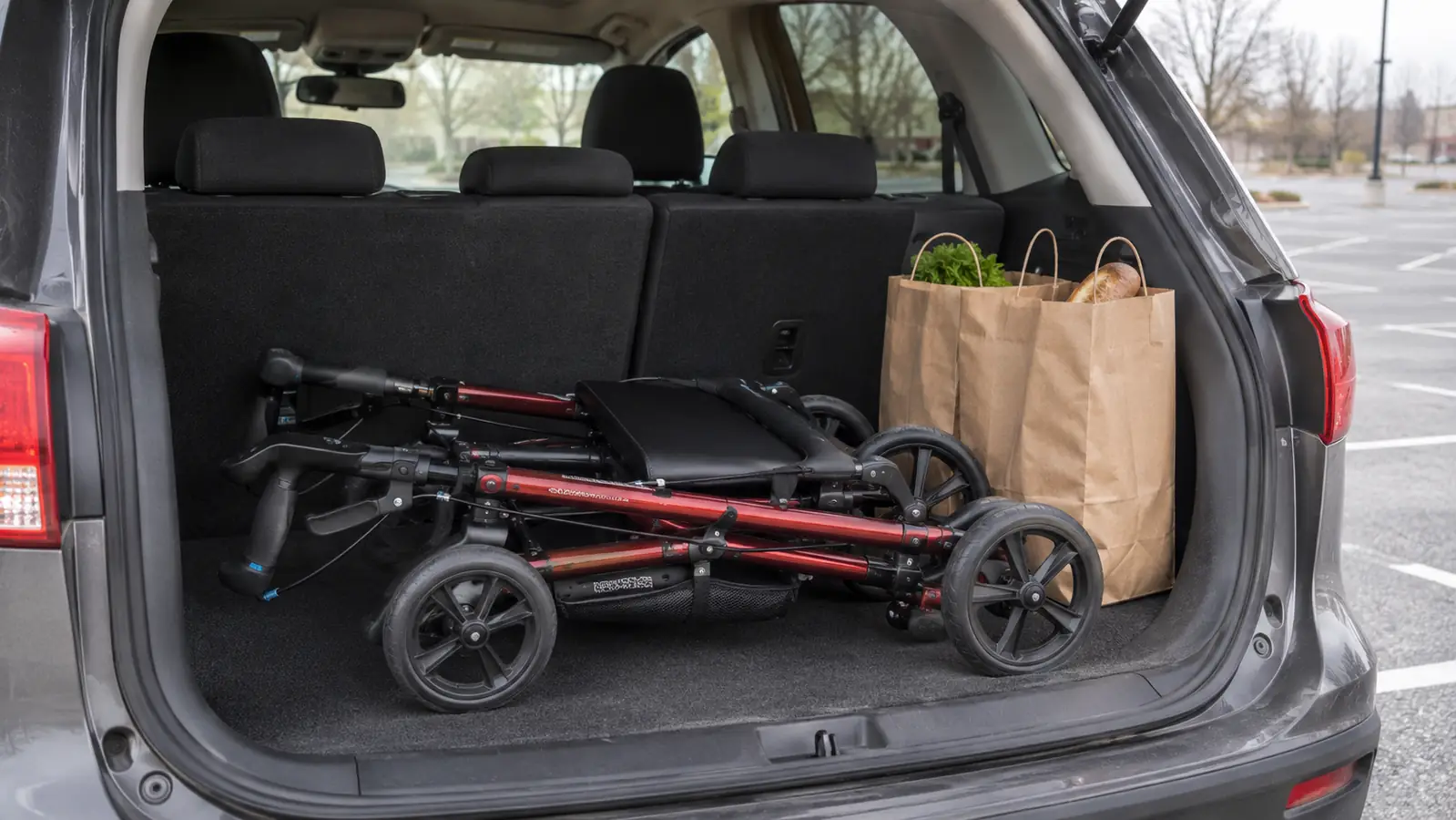
It folds flat and lies in the cargo area of my Forester without a fight. That detail matters more than it sounds. Twice a week it goes to the pharmacy, and on Sundays it goes to church. Folding it is one motion and lifting it is 20 pounds, and I would rather lift 20 pounds twice a week than watch her give up the pharmacy counter.
What I'd Tell You If We Were Sitting at My Kitchen Table
I would tell you to measure before you buy, because the handle height is the whole game. Have the person stand tall in their shoes and see where the wrist creases. Drive Medical lists a minimum height recommendation of 59 inches and a maximum handle height of 35 inches, so hold those numbers against your own before you order anything. If you land between sizes, ask your physical therapist to set the height with you, not a salesperson. Then look the frame and the handles over before each walk, the way I checked equipment in the clinic for 31 years.
The second thing I would say is that the seat is not a comfort feature. It is an independence feature. A person who knows there is somewhere to sit will walk farther than a person who does not, and that arithmetic has kept my mother on the sidewalk for 20 months. It is also the reason I stopped arguing with her about the walk. She does not need me to talk her into it anymore. She needs me to hold the door.
One last thing, and this is the nurse in me talking. A rollator is not a substitute for a fitting, and no article can tell you whether it suits your hips, your grip, or your balance. Ask your own doctor or physical therapist about fit and use before you take it outside. That is not a disclaimer. It is the most useful sentence in this piece.
Twenty Months, One Walk a Day, and Counting
If someone you love has stopped walking to the corner, the seat is worth a hard look. Check the height range, measure the handles, and ask their therapist to help you set it.
Amazon See the Drive Medical Rollator on Amazon →